Peptide Quality: Value Of Third-party Recognition
Peptide Pureness & Quantitation Testing
As the percent of natural solvent progressively increases throughout the run, particles are launched from the column in order of their hydrophobicity-- the more hydrophobic a peptide, the longer it takes to elute (wash off). Since impurities normally differ from the target peptide by at least one amino acid, they have slightly various hydrophobicities and show up as different heights on the chromatogram. The key point is not to confuse pureness (HPLC percentage of the primary peptide vs contaminations) with general web content. For experimental planning (like determining molar focus), both purity and web content are useful numbers, yet pureness is what mirrors the chemical homogeneity of the peptide example.Reputable peptide distributors constantly mark their products this way and supply quality reports with HPLC and MS data to support the purity level. As long as you obtain peptides from a relied on resource that offers a full certificate of evaluation, you can be positive in the peptide's pureness quality and use range. Peptides are examined with a combination of methods, consisting of HPLC for pureness, mass spectrometry (MS) for sequence confirmation, and nuclear magnetic resonance (NMR) for architectural evaluation. These methods assist determine the peptide's structure, confirm the molecular weight, and spot any type of structural changes or pollutants, ensuring the peptide meets quality and specification requirements. With our detailed peptide evaluation platform, Innovative Proteomics has created an extremely delicate and customized platform.
Measuring peptide pureness is typically made with logical high-performance fluid chromatography (HPLC), typically paired with mass spectrometry (MS) for identification confirmation. These analytical strategies are typical in peptide quality assurance and you will certainly often get HPLC and MS information with a research peptide order. The key analytical methods for peptides include fluid chromatography (LC), commonly HPLC, combined with mass spectrometry (MS) for exact molecular weight resolution and series recognition.- In addition, recurring independent screening sustains compliance in batch launch and quality control.
- " It does not, on its own, prove that the primary top is the intended peptide.
- Each peptide is carefully checked throughout the analytical cycle according to strict analytical quality assurance and biosynthetic quality control criteria.
Security Analysis
Store Coa-verified Study Peptides
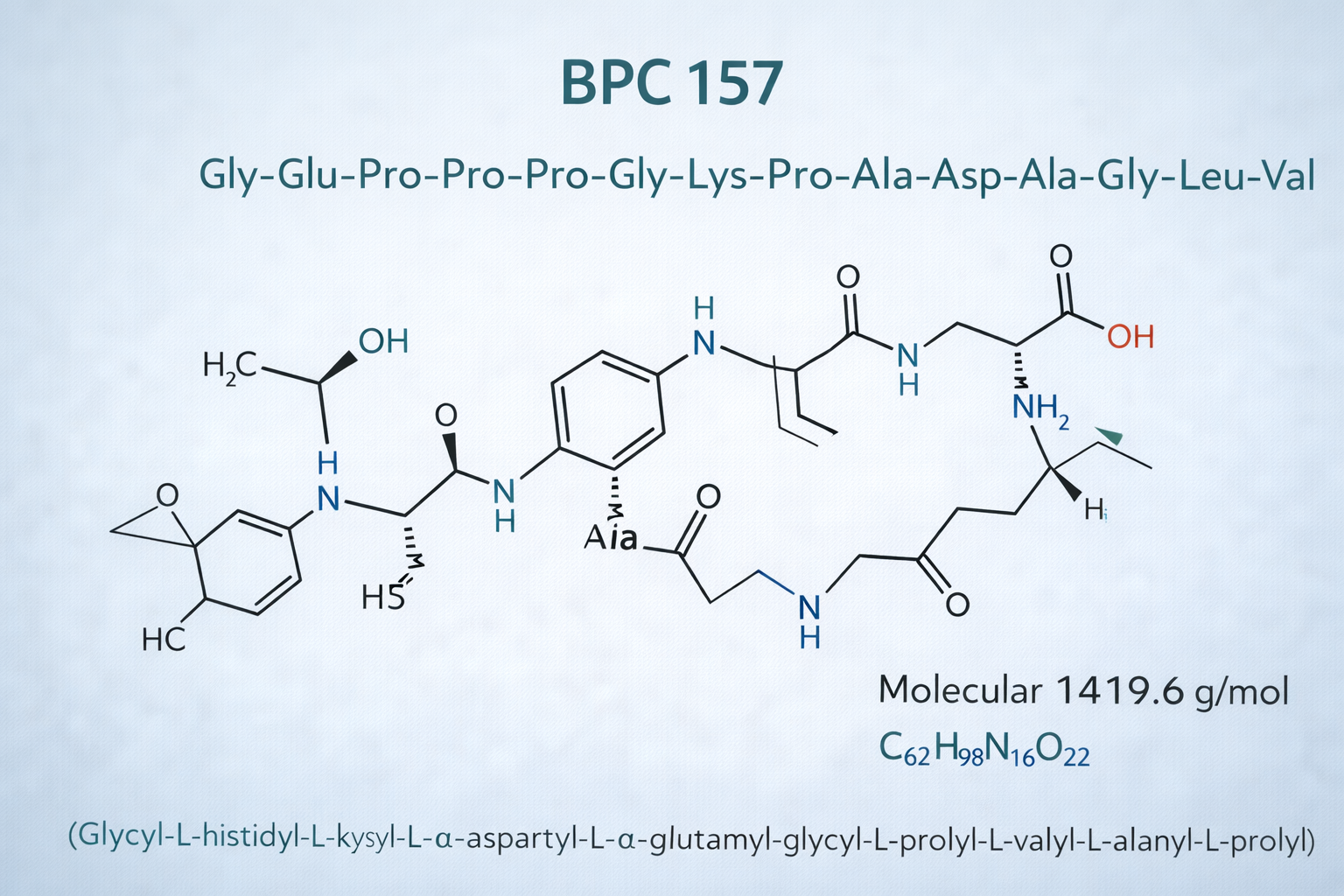
Along with HPLC and MS, specialized labs might employ orthogonal strategies for added precision. As an example, capillary electrophoresis can be made use of to divide extremely hydrophilic peptides or to double-check results, and MALDI-TOF mass spectrometry can aid in mapping larger or changed peptides. Many peptide manufacturers or providers will supply a COA (Certificate of Evaluation), for example our bpc 157 tb 500 mix, that includes the purity percent by HPLC and identity confirmation by MS for each and every set. Top-tier labs often report peptide pureness well over 95%, regularly ≥ 98-99%, by using advanced HPLC and MS analyses. They likewise examine both resources and ended up peptide vials, which assists capture any type of pollutants, destruction items, or solution variances.They are identified "for research use only" to make clear that they are intended for artificial insemination experiments or animal studies, not for any kind of type of human usage. As a matter of fact, a lab offering peptide screening must deliver information meeting the strict logical expectations of agencies like FDA and EMA [4] By utilizing a certified third-party laboratory, peptide makers or scientists guarantee an honest and expertly recorded evaluation of high quality, which is precisely what assessors look for. In addition, continuous independent testing sustains conformity in set launch and quality control. Laboratory validation for peptides suggests utilizing scientific examinations to validate a peptide's identity, pureness, and make-up. In method, this usually includes third-party or independent screening by an external lab to verify that a peptide item in fact contains what the label asserts [2]The companion page on why 99 percent pureness matters explains why small pollutant percentages can still matter in delicate in-vitro assays. Along with this peptide screening overview, those pages create the trust-methodology layer behind the item catalog. Peptide testing is effective, however scientists ought to check out the range of each technique very carefully.
While peptide pureness isn't the only element, utilizing badly defined reagents is an identified factor to irreproducible results. For a 10-residue peptide with 99.5% combining performance, you would certainly anticipate about 95% of the end product to be the unabridged sequence before filtration. For a 30-residue peptide at the very same performance, that drops to roughly 86%. This is why longer peptides are tougher to produce at high pureness and generally set you back even more. Pureness is the percent of books in the delivery that have every web page published correctly, in the ideal order, without any missing phases and no additional web pages stuffed in. A 95% purity suggests that out of every 100 "books" in your batch, 95 are ideal duplicates and 5 have some type of error. An example might generate a clean-looking chromatogram with one leading height and still be the wrong compound if identification was never confirmed. HPLC measures splitting up and family member peak area; mass spectrometry steps mass-to-charge actions that can be used to validate molecular identity. Peptide pureness testing is the procedure of validating that a peptide sample contains only the intended series-- and no significant pollutants or by-products from synthesis. Since peptides are developed with intricate chemical procedures, trace impurities can develop normally. Evaluating permits scientists to recognize specifically what remains in the vial, confirming both identification and top quality. Picking a reliable third-party laboratory is key to getting reputable peptide recognition outcomes.